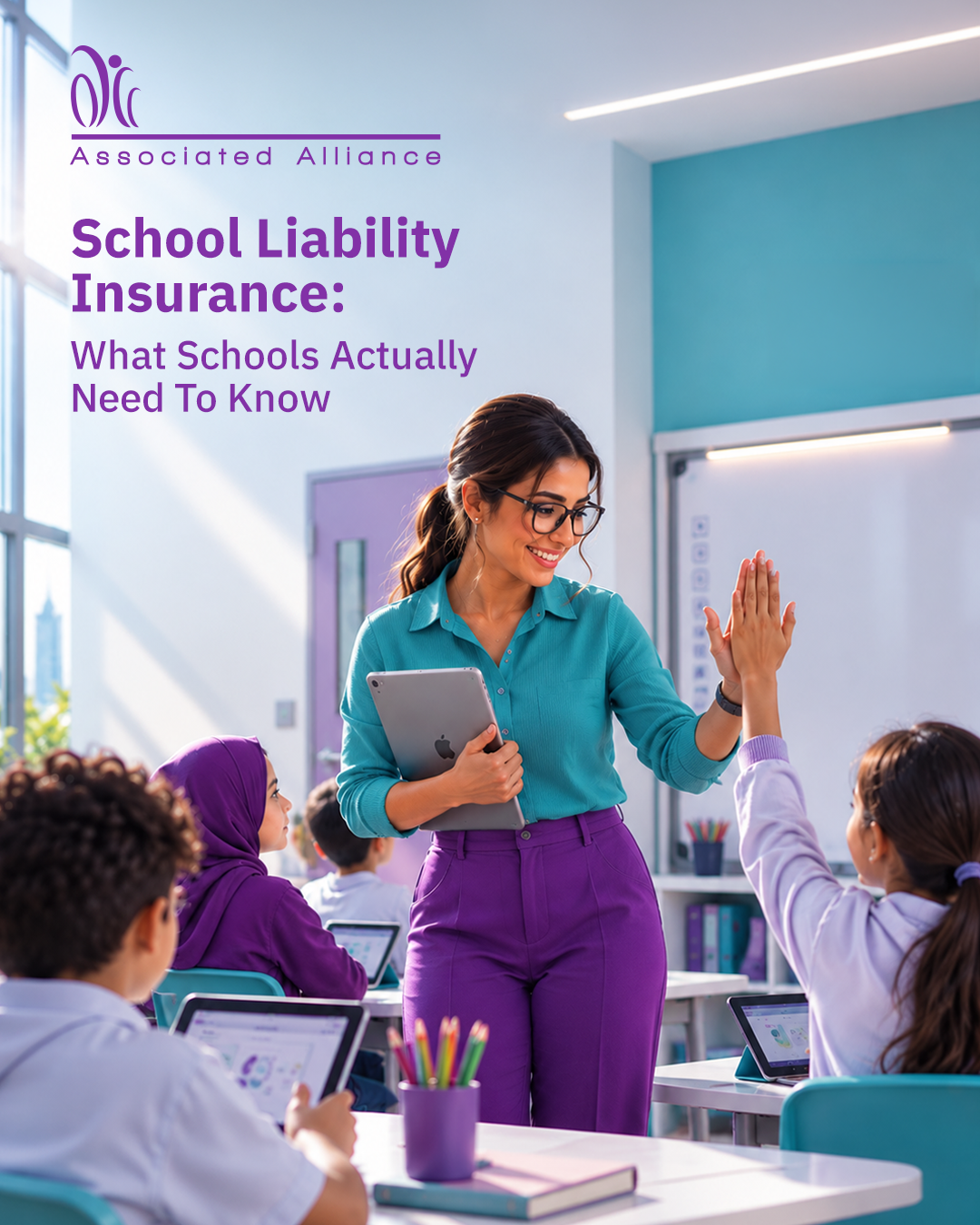
Schools are considered among the most trusted institutions in our communities. They take responsibility not only for education but also for the safety and wellbeing of students, teachers, staff, and visitors. From classrooms and playgrounds to sports facilities, school buses, field trips, and special events, schools manage a dynamic environment where people, activities, and responsibilities intersect.
With so much happening daily, incidents can occur even in the most well-managed institutions. These situations do not necessarily result from negligence. They are simply part of the reality of operating a busy educational environment. That is why liability insurance has become an important component of responsible school management.
Looking Beyond Compliance
Across many countries in the Middle East, schools are required to maintain certain types of insurance as part of regulatory, licensing, or contractual obligations. While compliance is important, it should not be the primary reason for purchasing coverage. The real purpose is to protect the school’s financial stability, reputation, and ability to continue operating when unexpected situations arise. A single incident can lead to legal expenses, compensation costs, administrative disruption, and reputational concerns. Having appropriate protection in place helps schools navigate these challenges while remaining focused on their core mission: education.
Every School Has Its Own Risk Profile
One of the most common misconceptions is that all schools face the same risks. In reality, every institution operates differently. A school with extensive sports programmes faces different challenges from one focused primarily on academics. Schools operating transportation services have different considerations from those relying on independent transport providers. Institutions offering laboratories, swimming pools, international trips, or vocational programmes often require additional attention. Cyber risk is also becoming an increasingly important consideration across the region. As schools continue to digitize records, admissions, communications, and learning platforms, safeguarding sensitive information is now as critical as maintaining a safe physical environment.
Understanding What Matters
School liability insurance can extend across several areas, including third-party liability, professional liability, student accident coverage, and cyber protection. However, the conversation should not stop at policy purchase. School leaders should understand how their insurance is structured, what it is designed to address, and any limitations that may exist. Taking the time to review policy terms, conditions, and limits before an issue arises can help avoid misunderstandings and provide greater confidence when decisions need to be made.
Where A Broker Adds Real Value
This is where the role of a broker becomes particularly important. A good broker does far more than obtain quotations and compare premiums. They take the time to understand how a school operates, assess its risk profile, explain policy wording in clear language, and ensure protection is aligned with the institution’s activities and responsibilities.
At Associated Alliance, we view our role as that of a long-term advisor rather than simply an insurance provider. We work closely with schools across the region to understand their operational challenges, support their risk management efforts, and provide ongoing guidance as their needs evolve. Our objective is to help educational institutions make informed decisions and secure protection that genuinely reflects their environment. Because when challenges arise, schools need more than an insurance policy. They need a trusted partner who understands both the education sector and the realities of risk management.
Final Thoughts
Liability insurance should never be viewed as just another administrative requirement. The more important question is not whether a school has insurance, but whether its protection reflects the realities of its operations, responsibilities, and daily activities. As expectations from parents, regulators, and communities continue to evolve across the Middle East, schools benefit from advisors who understand both education and risk, not simply insurance products. Because protecting a school ultimately means protecting the environment where future generations learn, grow, and succeed.